Couples Counseling
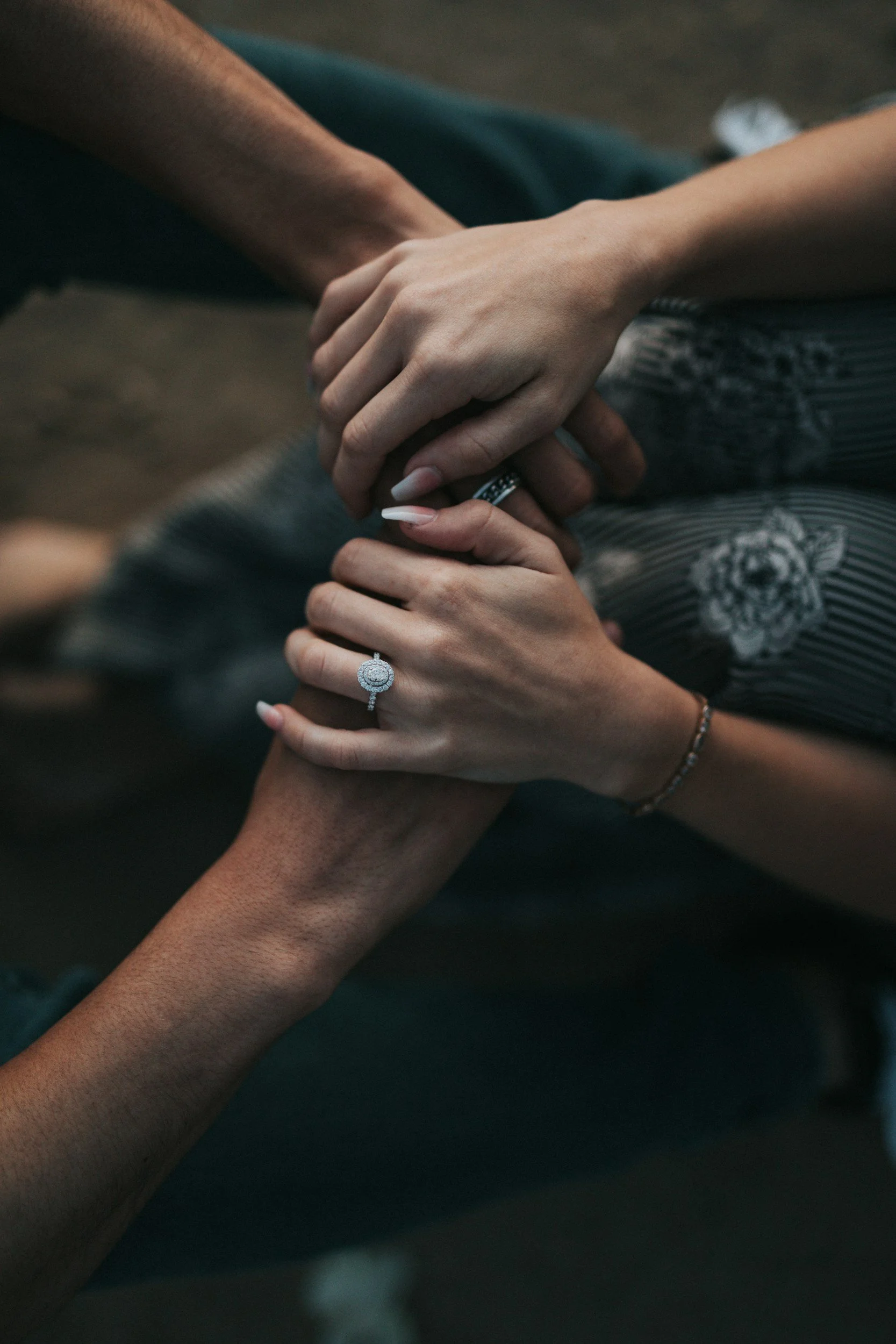
Staying together is a choice. Let’s make it a good one.
You love each other, but you keep having the same fight. Or you have gone quiet, and the house runs like a well-organized business. Or you are not fighting about the dishes at all, and you both know it. Whatever brought you here, the real question is the same one every couple eventually meets: are you living out a script someone else handed you, or building something that's actually yours to author?
Most couples arrive with a set of rules nobody in the room ever agreed to out loud: who initiates, who carries the load, what gets talked about and what doesn't. Those rules came from your families, your last relationships, and the culture around you, not from the two of you sitting down and choosing them. Underneath many of them is what Gottman calls a bid for connection: a small reach for attention, affection, or support, and whether it gets turned toward or turned away. You didn't write most of these rules, which means you're also free to rewrite them. Some are worth keeping. Some of them are the reason you're here.
What Couples Counseling with me is like:
What the work looks like
We'll look at the subconscious relationship rules you're both carrying and decide, deliberately, which ones to keep. That means slowing down the patterns that keep you stuck, understanding what is actually happening underneath them, and building agreements you both actively choose. We draw on what Gottman calls the Sound Relationship House: your friendship, how you turn toward each other's bids, how you manage conflict, and the shared meaning you're building together. This isn't a list of homework. It's a real conversation, at a pace that fits the two of you.
Commitment and permanence are not the same thing. Permanence is something you can inherit, or may assume is locked-in the moment you say "I do." Commitment is something you keep choosing, and the work here is about making that choice easier to make.
Relationship security comes less from the promise of forever than from agreements you both understand and keep renewing, a cornerstone of Emotionally Focused Therapy. The fear of losing each other can quietly make things worse: it pushes people to grip tighter instead of showing up honestly, feeding what EFT calls the cycle. Learning to hold commitment more steadily, without gripping, is something we practice together.
Who this is for
Partners who want to stay and want it to feel different
Couples in a long stretch of distance, resentment, or a repeating conflict, what Gottman calls a perpetual problem rather than something to solve once and move on
People recovering from a rupture, a betrayal, or a hard season
Partners of any gender, orientation, or background. This practice is LGBTQ+ affirming and secular.
Who this is not for:
This work depends on both partners being honest and physically safe with each other. It is not the right fit for couples where one partner is currently having an affair they have not disclosed, or where there is active domestic violence or a credible fear of physical harm. In either case, couples therapy can make things worse, not better. If this is where you are, please reach out to one of the resources below, or to me for a referral to individual support.
If you are in Flathead Valley: Abbie Shelter serves Flathead County with a helpline, advocacy, shelter, and counseling for survivors of intimate partner violence and sexual assault. Helpline: 406-752-7273. abbieshelter.org
Nationally: The National Domestic Violence Hotline is available by phone, text, and live chat. Call 1-800-799-7233, or text START to 88788. thehotline.org
If you are in immediate danger, call 911.
How I work:
My work with couples draws primarily on the Gottman Method and Emotionally Focused Therapy, along with mindfulness-based and other evidence-based tools where they help. My style is warm and direct: I'll tell you what I actually see in the room, and you decide what fits.
What to expect:
We assess where you stand. I'm trained to Gottman Level 2, so we start with a real picture, not a guess: where you stand in what Gottman calls the Sound Relationship House, your friendship, your conflict patterns, and the meaning you're building together. This tells us what you inherited, and what's actually yours.
We build your love maps. We get specific about each other's inner world: your history, your stress, your hopes, what's changed since you first knew each other. Most couples are working from an outdated map without realizing it.
We grow a culture of appreciation. Fondness and admiration are a renewable resource, not a fixed starting amount. We build the habit of noticing and naming what you respect in each other, on purpose, instead of leaving it assumed.
We learn to do conflict differently. Conflict isn't the problem, the four horsemen are. We replace criticism, contempt, defensiveness, and stonewalling with real repair attempts and turning toward each other, so disagreement stops costing you connection.
We build shared meaning, chosen on purpose. This last stage isn't a technique, it's a decision: what rituals, values, and goals the two of you actually want, not the ones you inherited. That's the whole thesis of this work. The structure of your relationship is yours to choose.
Curious to learn more? Book a 20-minute consult and we'll talk it through. No pressure and no pitch.
What to Expect in Couples Therapy:
We get the full pictureIn the first sessions, I meet with both of you together and each of you individually. I'm building what Gottman calls your love maps, understanding your history, your triggers, and what each of you wants that you haven't said out loud yet.
We name the patternsMost couples are stuck in a cycle, not just a single fight, often fueled by what Gottman calls the four horsemen or a missed bid for connection. Together we slow it down and name what each of you is protecting underneath the argument.
We build what's nextThis is where we turn insight into practice: real repair attempts, rituals of connection, and agreements the two of you actually choose, not inherited ones. We also work toward softening the cycle itself, so reaching for each other starts to feel automatic.
Frequently Asked Questions
-
Because it's built on research, not a theory about how relationships are supposed to work. John and Julie Gottman studied thousands of couples over decades and could predict, with striking accuracy, which relationships would last and which wouldn't, based on specific, observable patterns: how couples fight, how they repair, and whether they keep turning toward each other in small moments. I use it because it gives us an actual map of what's happening between you, not a guess, and because the map doesn't tell you what to build on top of it. That part is still yours to choose.
-
An 80-minute initial session is $350 and includes an through assessment and a roadmap for our work together. Subsequent 80-minute sessions are $250. A limited number of sliding-scale spots are available; ask about availability in your consult.
-
No. Couples therapy is private pay, because insurance requires a mental health diagnosis, and a relationship isn't something that gets diagnosed. Private pay also means no record of your sessions goes to an insurer.
-
Most couples work with me for 12 to 24 sessions, though that depends on what you're working through. If you want to move faster, I also offer intensives of 3, 6, or 12 hours.
-
Our adaptable methodology serves manufacturing, retail, professional services, and public sector entities.
-
Yes, for couples located in Montana at the time of the session.
-
That's common, and it's exactly what the free consult is for. If discernment counseling or premarital work fits better, I'll say so.